C asks: “When I feel I’m whelming up inside, like a watery, tearful emotional ‘aroma’ I can’t seem to be with it; and then later in the day it’s got so big, I end up crying my eyes out and it all gets released…”
You acknowledge the feelings that are there, and then one by one, imagine you are setting the feeling outside your body, somewhere close by… See where it would like to be put….
Presence
Living with uncertainty

Living with uncertainty and not knowing in your life can be destabilising, leading to anxiety.
I have had times in my life when I didn’t know where I was going to live, or how I was going to earn a living. It felt scary, feeling the ground shifting under my feet. And right now we are living in uncertain times…
The Presence of Awareness
When you are Focusing, it helps to develop your capacity for awareness.
This deepens and enriches your Focusing and brings lasting change into your life…. You can find your awareness in your mind, in your heart or in your belly. You can look for it where it is most accessible, in external sensory awareness, or internal awareness.
The value of Focusing in these difficult times

I want to say how much I value Focusing in these difficult times.
It is giving me enormous support on a personal level.
I am sure that everyone can benefit as much as I do, even though you may already have support systems in place, such as mindfulness, meditation, support of family and friends, and connection with nature.
Focusing and Internal Family Systems Therapy

A Focusers asks: ‘I’ve been reading about Internal Family Systems Therapy… and wonder if you can answer my question….what is the difference between the Focusing you do and IFS?’
Focusing emphasises the felt sense, which is something unclear, fuzzy and not yet defined.
I suggest that you put your attention into the inner area of your body, while holding an awareness of the parts you are being with. Look for what’s unclear about ‘the whole thing’, more than you already know about this.
How does one operate from a place of quiet/presence/heart?
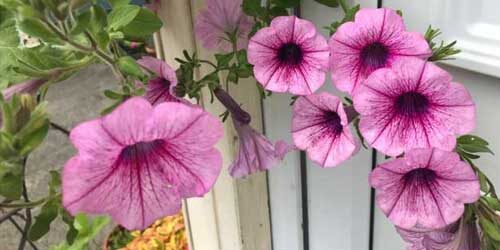
A Focusers asks, ‘One question I had in mind while listening to your session was, how does one operate from a place of quite/presence/heart to attend the difficult aspects/parts of oneself.’
I agree that our identification with parts of us goes very deep.
Even though we would love to be able to live from the awakened, aware state all of the time, few of us experience that. In my view, it is enough that we can experience it at least some of the time.
Developing compassion and empathy with Focusing

A key aspect of Focusing partnership is to be able to show compassion and be empathic with your partner.
The Focuser needs to feel safe with you, and they need to know that they will not be judged or criticised. But how do you actually do it, and can compassion and empathy be learned?
When I find something difficult in my Focusing, I go to a soothing peaceful place.
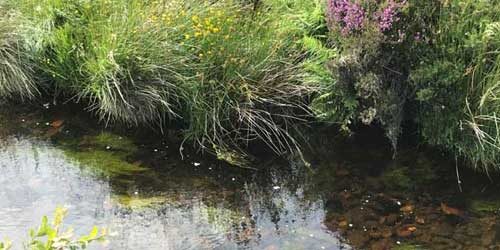
A Focuser says: ‘Sometimes when I find something difficult in my Focusing, I go to a soothing peaceful place with a calm peaceful lake and I feel much better.’
There is nothing wrong with doing this.
…This enables you to give your friendly, non-judgemental attention to whatever is difficult.
As long as you don’t stop there…
What do Focusers mean when they talk about the body?

I have returned inspired from a meeting of Focusing professionals in Europe. We met in Aegina, a beautiful island close to Athens, and collaborated in developing our lively European Focusing Association.
Our dear colleague and friend, distinguished writer Campbell Purton got us started on exploring what do we mean when we talk about the body. He is a philosopher, and helped us to think deeply about what Gene Gendlin was referring to when he talked about the body.
How I work with Focusing…
Every Focusing teacher develops their own style of teaching, just as every Focuser develops their own Focusing practice, because each of us is unique…
Gene Gendlin, who developed Focusing, said Focusing always ‘crosses’ with something else. It isn’t a standalone practice, because you change it by being who you are. Your personality, past history, current interests and understandings all inform your Focusing practice. I cannot separate myself from my past, my nature, or my way of being. Focusing crosses with who we are.
 Connect on Facebook